


Back pain while shopping is usually caused by a single factor, but rather by a combination of weight, posture, distance, rushing, and repetitive movements. Carrying bags, walking hunched over, or climbing curbs with heavy items can overload the lower back, even if the shopping trip seems "normal." The good news is that with a few simple changes and the right shopping cart, you can significantly reduce back strain and shop more comfortably.
The real causes of back pain while shopping
When someone says, "My back hurts at the supermarket," they often think the problem lies in their age, a momentary lapse in posture, or having bought too much. However, the root cause is usually how the weight is distributed and how the body responds when it tries to compensate. The back doesn't work alone: shoulders, hips, abdomen, legs, and arms all play a role.
At Carlett, we often emphasize a very simple idea: it's not just how much weight you carry, but how you carry it. A typical grocery shop might seem manageable inside the supermarket, but that changes completely when you have to walk home, climb stairs, cross streets, or carry the bags from the car.

Carrying bags in one hand
Carrying several bags in one hand forces the body to lean slightly to the opposite side to maintain balance. This movement may seem small, but the lower back muscles work asymmetrically to stabilize the torso. If the bags are also rigid, dig into the hand, or swing while walking, the effort increases.
The usual result is a mixture of tension in the lower back, discomfort in the shoulder, and a feeling of tightness in the neck. Lower back pain can also occur when carrying bags, especially if the walk is long or if the weight is concentrated in items like bottles, milk, detergent, fruit, or pet food.
A simple way to reduce this load is to distribute the weight between both sides, but this isn't always practical. Therefore, when shopping is a weekly occurrence, transporting the weight on wheels is usually a more logical solution than relying solely on arm and back strength.
Posture When Carrying a Load and Its Impact on the Lower Back
When walking with a load, many people lean their heads forward, round their shoulders, and shorten their stride. This is a protective posture: the body tries to prevent the load from slipping and maintain balance. The problem is that this compensation increases pressure on the lower back and can cause premature muscle fatigue.
The type of terrain also plays a role. Walking on a smooth sidewalk is not the same as dodging curbs, climbing ramps, entering a narrow elevator, or pulling a poorly balanced wheeled bag. In our case, when we talk about daily mobility, we don't just think about the journey inside the store, but the entire actual route: from leaving home until you put away your groceries.
If you notice back pain while carrying groceries, pay attention to three things: whether you lean forward, whether you twist your torso to compensate for the weight, and whether you end up using one side more than the other. These small, repeated habits can explain why an everyday task ends up causing discomfort.
What kind of back pain is worrisome and which isn't?
Not all back pain is the same. Many aches and pains after grocery shopping are due to muscle strain and improve with rest, gentle movement, and avoiding lifting heavy objects in the same way again. Even so, there are signs that shouldn't be ignored.
This article is not a substitute for a medical evaluation. It's meant to help you distinguish between common discomfort from exertion and symptoms that require professional attention, especially if the pain is intense, frequent, or limits your daily life.

Muscle pain from overuse: how to recognize it
Muscle pain from overuse usually appears after exertion or a few hours later. It can feel like stiffness, tightness, fatigue in the lower back, or discomfort when bending over. It usually improves by changing position, walking gently, or resting.
It's also common for the pain to be related to a specific movement: carrying heavy bags, climbing stairs with groceries, lifting a box from the car, or walking for longer than usual. In these cases, the key is to reduce the frequency of the effort and review how you carry the load.
At Carlett, we usually recommend paying attention to the "early warning signs": that slight discomfort that appears before the intense pain. If you notice the same area feeling heavy every time you come back from the supermarket, don't wait until it becomes a limitation. Changing your carrying method is usually easier than correcting a problem that's already established.
Warning Signs That Do Require Medical Attention
There are situations in which back pain shouldn't be attributed solely to lifting heavy objects. Consult a healthcare professional if the pain is very intense, appears after a fall, doesn't improve over several days, radiates down one or both legs, is accompanied by tingling, weakness, fever, unexplained weight loss, or problems controlling urination or bowel movements.
It's also advisable to seek help if the pain wakes you up at night, worsens rapidly, or occurs alongside a general feeling of malaise. Most discomforts related to shopping are mechanical and benign, but warning signs should be evaluated as soon as possible.
How to Protect Your Back Every Time You Shop
Protecting your back doesn't mean stopping shopping altogether or moving around in fear. It means reducing unnecessary strain and ensuring your body works in a more balanced way. Before choosing a shopping cart or changing your habits, it's worth reviewing how you shop: how much weight you usually carry, how far you walk, whether you climb stairs, whether you use public transport, and whether you need extra support while walking.
A good guideline is to place the heaviest items at the bottom, avoid filling small bags to the brim, and refrain from making sudden turns while carrying heavy items. If you're lifting items from the floor or the trunk, keep the load close to your body and avoid twisting your waist while holding it.

Why a shopping trolley completely changes the equation
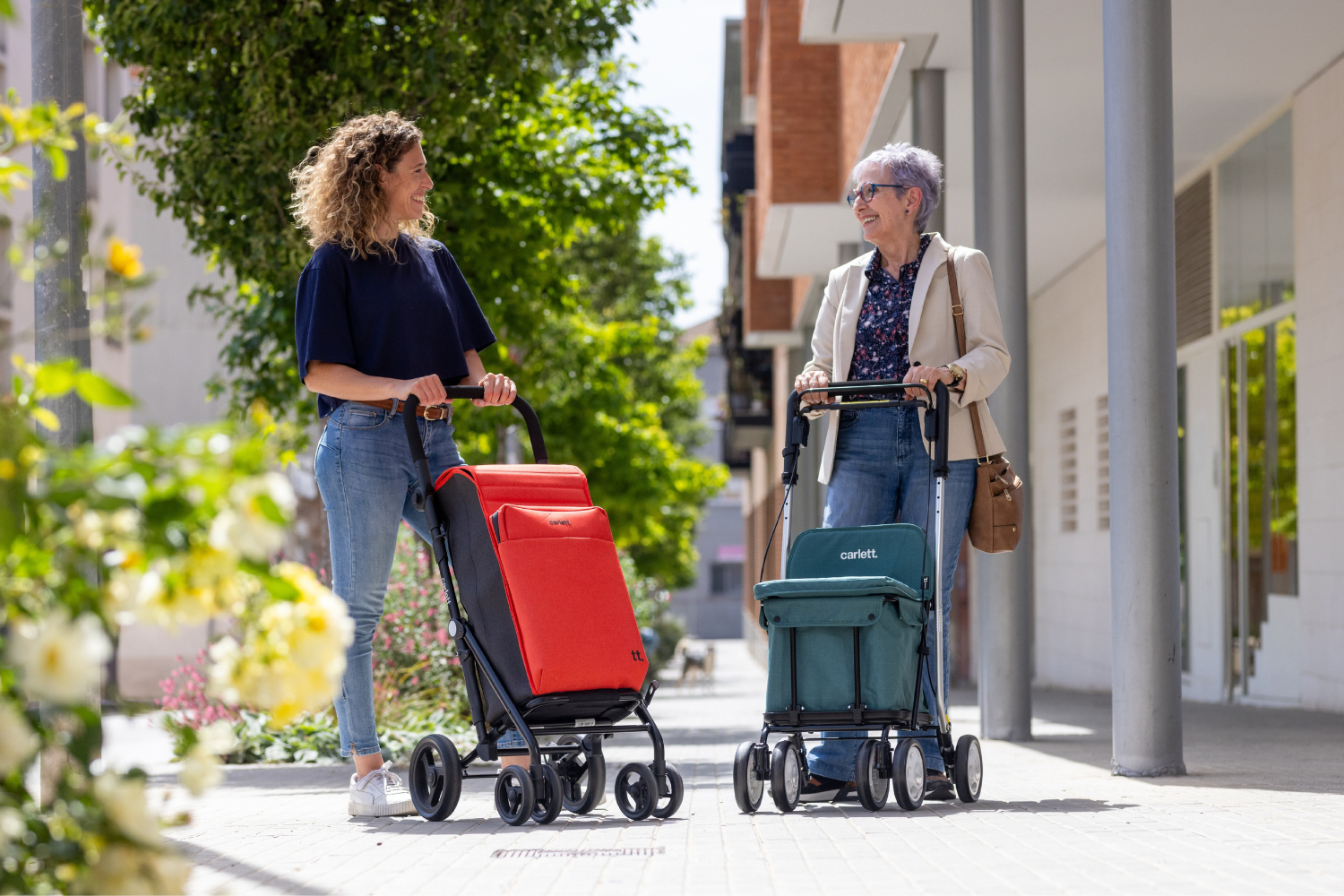
A shopping trolley transforms the task because it shifts much of the effort from your back and arms to the wheels. Instead of lifting and carrying, you push or pull a structure designed to transport weight with greater stability. Therefore, an ergonomic shopping cart isn't just a practical accessory: it can be a real help in reducing lower back strain during regular shopping trips.
The difference is especially noticeable when shopping for liquids, bulky items, or long distances. With a well-chosen shopping cart, you can maintain a more upright posture, the load is better distributed, and the effort is more evenly distributed. For options adapted to different uses, you can check out Carlett's shopping trolleys.
In our case, the recommendation isn't to choose "the biggest cart" by default, but rather the one that suits your mobility, your home, and your shopping habits. A good cart should help you before, during, and after your trip to the supermarket: when maneuvering, going up curbs, storing it at home, and unloading it without straining your back.
Which shopping trolley is best for your back, depending on your needs?
Not everyone carries the same weight, and not all shopping trips have the same demands. That's why choosing the right cart is important. A model that works well for a large shopping trip might not be the most comfortable if you live in a small apartment; and a lightweight cart might not be enough if you usually carry heavy loads.
If you have limited mobility or use a cane
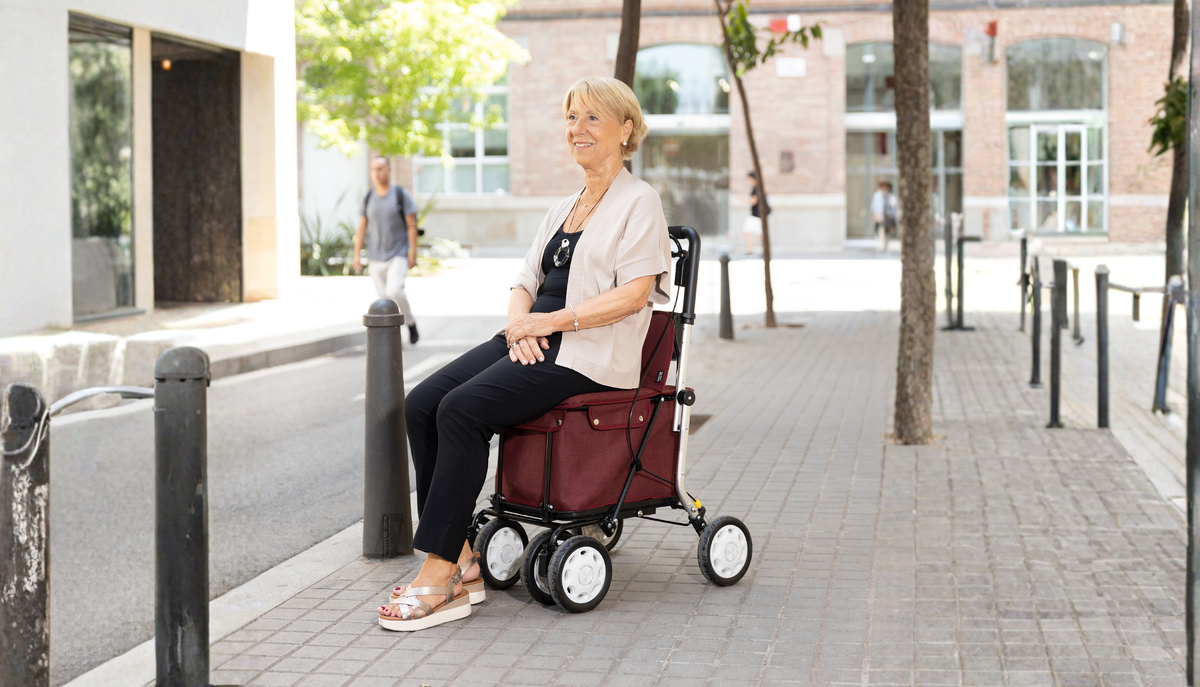
If you walk unsteadily, tire easily, or need a support, a conventional cart might not be sufficient. In these cases, a model with a support function can make shopping more stable and comfortable, because it's not just about carrying weight, but about moving with confidence.
A shopping trolley with a built-in walker can help you maintain a more controlled posture and reduce compensatory movements that end up straining your back. The priority here is stability, not speed.

If you live in a small apartment or use public transport
When space at home is limited, or you need to take the bus or subway, or store your shopping cart in a corner, size matters a lot. An awkwardly folded shopping cart can end up forcing you to lift it, twist it awkwardly, or simply stop using it altogether—the exact opposite of what you want.
In this scenario, folding shopping trolleys are a practical option because they reduce their volume when not in use. For your back, the advantage lies in avoiding forced movements when storing or transporting it in tight spaces.
If you're looking for maximum stability and comfort
Four-wheeled shopping carts are usually a good choice if you want to avoid constantly pulling the weight. Because you can push them more naturally, they help keep your body more aligned and reduce torso twisting, which is important if you tend to experience lower back strain.
Four-wheeled shopping trolley are a good fit when stability is a priority on regular routes, smooth surfaces, and medium-weight purchases. At Carlett, we often recommend them to people who highly value the feeling of control while moving around.
If you do large, heavy shopping trips
If you do a big weekly shop, carrying several bags by hand isn't good for your back. The heaviest items are usually concentrated in just a few products, and by dividing them into bags, you end up making several small efforts that add up: lifting, walking, setting things down, lifting again, and unloading.
In these cases, large, sturdy shopping trolleys allow you to group your purchases and reduce trips. The key is not to confuse capacity with excess: just because the cart allows for more volume doesn't mean you should always fill it to the brim.
If you prefer something light and easy to handle
For small to medium-sized shopping trips, a lightweight shopping cart might be enough. It's a practical alternative if you're looking for something simple, easy to move, and without too much bulk. In this case, it's worth paying attention to the handle height, the wheel size, and how easily it can go over small curbs.
Two-wheeled shopping trolley are a manageable option for those who shop frequently but don't buy excessively heavy items. When used correctly, they can prevent you from carrying bags in one hand and repeating the same movement that causes discomfort.

Common mistakes when using a shopping trolley that continue to damage your back
Having a cart helps, but it doesn't solve everything if it's used incorrectly. Some habits maintain lower back tension even if you're no longer carrying bags by hand. The idea is for the cart to work in your favor, not force you into new uncomfortable postures.
Overfilling it
An overfilled cart is harder to move, turns less efficiently, and can force you to pull with your arms and back. Furthermore, when it comes to going up a curb or entering your home, the weight is suddenly noticeable. If you have a large shopping trip, it's sometimes better to split it into two trips or prioritize a model designed for greater capacity.
The practical rule is simple: if you need to lean back or make a sudden jerk to start the cart, there's too much weight or it's unevenly distributed. Place the heaviest items at the bottom and near the wheel axle to improve stability.
Improperly Adjusted Handle Height
A handle that's too low forces you to hunch over; one that's too high can strain your shoulders and neck. The correct height should allow you to walk with your back straight, shoulders relaxed, and arms in a natural position. This detail makes a big difference on long journeys.
In our case, when we talk about comfort, we're not just referring to padding or design. It's also important that the cart supports your posture. If the handle forces you to change the way you walk, that cart isn't working well for your back.



Leave a comment
All comments are moderated before being published.
This site is protected by hCaptcha and the hCaptcha Privacy Policy and Terms of Service apply.